Description
The Utility Industry is evolving and adapting to new regulations, changes in public perception and emerging market opportunities. Drivers of change include aging infrastructure, opportunities for decarbonization, the need for sustainability, cyber-security and moving towards green energy. Enabling modern data resources and capabilities to assist with these challenges is critical for success.
The world of data management also continues to change, but data governance doesn’t always keep pace. New governance practices and organizations are needed to be compatible with agile, big data, cloud, and self-service to support the changing business dynamics. Moving from control to community, from enforcement to prevention, from controls to services, and from committees to communities are at the core of data governance evolution.
Traditional data governance needs to ensure that internal data literacy and strategies continue to be aligned with the evolving business goals. It also needs to adapt to the realities of today’s data management practices. We need to start with the ABCs of modern governance — Agile, Big Data, and Cloud. Each of these has been in the mainstream for several years, yet most data governance organizations cling to practices of the past. More recently, self-service analytics and self-service data preparation have challenged the old governance methods.
Traditional data governance focuses on enforcement of policies and rules using rigorous controls and gates. While controls and enforcement continue to be needed, they must be complemented with support for the autonomy and agility of the self-service world. Enforcement works together with prevention. Guides and guardrails reduce the need for gates. The need to exercise controls is minimized when curating, coaching, crowdsourcing, and collaboration are integral parts of governance processes. In the modern data world, every data stakeholder plays a part in data governance.
You Will Learn:
- Where governance fits within modern data ecosystems in the Utility Industry
- Process challenges for supplementing controls with collaboration and crowdsourcing
- Organizational challenges for moving from data stewards to stewardship, curation, and coaching
- Operational challenges for implementing a combination of gates, guardrails, and guides
- Why data ethics is a data governance challenge and how to begin tackling the issue
- Why you need to transition from traditional data stewards to stewardship, curation and coaching
- How to use a data governance framework plan for data governance modernization and evolution
Geared to:
- Data governance professionals of all types
- Data stewards and data curators
- Business and technical leaders implementing and managing self-service data and analytics
- Business and technical leaders who see current data governance practices as barriers to agility
- Chief Data Officers and other executives responsible to shape data culture
- Everyone with a role in modernizing data governance or an interest to know how and why data governance must change
Presented by

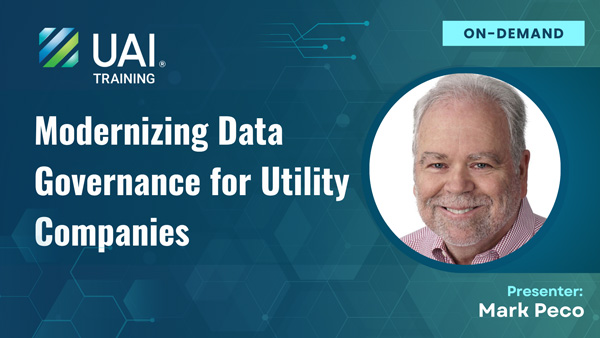
Mark Peco is an experienced consultant, educator, practitioner, and manager in the fields of Business Intelligence and Process Improvement. He provides vision and leadership to projects operating and creating solutions at the intersection of Business and Technology. Mark is actively involved with clients working in the areas of Strategy Development, Process Improvement, Data Management and Business Intelligence. He holds graduate and undergraduate degrees in engineering from the University of Waterloo and has led numerous consulting and integration projects helping clients adapt to fundamental shifts in business models and requirements.
His experience includes real time process monitoring and control, operations planning and scheduling, control center management, plant performance optimization, business transaction control, simulation, and analytics. He has worked in the fields of Data Warehousing and Business Intelligence since the mid 1990’s complementing his earlier experience gained in as an engineer working in operations management during the 1980s.
Mark has integrated his communications skills with his domain expertise to create educational content and deliver courses and workshops for BI and DW Professionals on a global basis for more than a dozen years. He enjoys helping professionals with diverse backgrounds develop common perspectives and share new levels of understanding about complex concepts and subjects.
Mark has worked extensively in the energy sector and understands the business context, operations challenges, and business intelligence opportunities available to help management solve difficult issues and improve operating results.