

The Utility Industry is facing new regulations, changes in public perception, and emerging market opportunities. Drivers of change include aging infrastructure, opportunities for decarbonization, the need for sustainability, cybersecurity, and the transition toward green energy.
Understanding why things happen is a fundamental management skill. For anyone challenged to manage data quality, business processes, or people and organizations, finding root causes is an essential skill. Understanding why is the key to knowing what to do—the core of sound decision-making. But cause-and-effect relationships are elusive. Real causes are often difficult to find, so we settle for easy answers. This leads to fixing symptoms rather than solving problems, often resulting in little or no meaningful improvement where opportunity is abundant.
Root cause analysis is the alternative to easy answers. Looking beyond the apparent and obvious to uncover real causes brings insight and plants the seeds of foresight. Through this course, you will discover the art and science of understanding why. Learn to apply linear thinking, lateral thinking, systems thinking, and critical thinking—independently and in combination—to get to the core of even the most complex problems.
You will learn:
- Recognize and avoid logical fallacies
- Identify and distinguish between correlation, coincidence, and cause
- Perform fast and light causal analysis using the “5 whys” technique
- Explore linear cause-and-effect chains with fishbone diagramming
- Describe complex cause-effect networks with causal loop models
- Challenge and refine linear and loop models with lateral and critical thinking techniques
- Apply root cause analysis to effectively manage quality, processes, and organizations
Geared to:
- Business managers, decision makers, analysts and other analytics consumers seeking to understand how to improve process performance
- Operational excellence and digital transformation professionals working to reduce waste, improve performance and implement sustainable solutions
- Everyone who needs to improve their understanding of what forces are driving the results being
measured in displayed in dashboards and scorecards - Everyone who uses data to develop strategies and implement business improvement solutions
Presented by

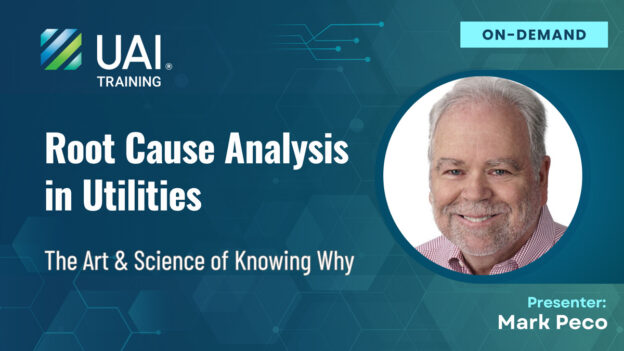
Mark Peco is an experienced consultant, educator, practitioner, and manager in the fields of Business Intelligence and Process Improvement. He provides vision and leadership to projects operating and creating solutions at the intersection of Business and Technology. Mark is actively involved with clients working in the areas of Strategy Development, Process Improvement, Data Management and Business Intelligence. He holds graduate and undergraduate degrees in engineering from the University of Waterloo and has led numerous consulting and integration projects helping clients adapt to fundamental shifts in business models and requirements.
His experience includes real time process monitoring and control, operations planning and scheduling, control center management, plant performance optimization, business transaction control, simulation, and analytics. He has worked in the fields of Data Warehousing and Business Intelligence since the mid 1990’s complementing his earlier experience gained in as an engineer working in operations management during the 1980s.
Mark has integrated his communications skills with his domain expertise to create educational content and deliver courses and workshops for BI and DW Professionals on a global basis for more than a dozen years. He enjoys helping professionals with diverse backgrounds develop common perspectives and share new levels of understanding about complex concepts and subjects.
Mark has worked extensively in the energy sector and understands the business context, operations challenges, and business intelligence opportunities available to help management solve difficult issues and improve operating results.
Course Content
Course Includes
- 7 Modules
- 5 Quizzes
- Course Certificate